Key Takeaways
- Warm white mini lights produce the softest, most romantic glow for Connecticut outdoor evening ceremonies — far more flattering than cool white or colored alternatives.
- Garland draping across pergolas, tent poles, and ceremony arches requires precise load calculations and secure mounting to stay picture-perfect all night.
- Professional installation is essential for safety near guests, catering equipment, and open-air dance floors where cord management and weatherproofing matter most.
- Connecticut's summer humidity and afternoon thunderstorms demand outdoor-rated fixtures and GFCI-protected circuits on every circuit used at a venue.
- Booking a lighting team 3–6 months ahead of your summer date ensures equipment availability and proper site planning for complex Connecticut venues.
The moment the Connecticut sun dips below the tree line and the first stars emerge over a riverfront meadow or a colonial estate garden, the right lighting either makes the scene magical or exposes every practical shortcut. Couples who spend months perfecting their florals, catering menus, and table linens sometimes give lighting only a last-minute thought — and on the night, it shows. A tent draped with 15,000 warm white mini lights glowing at dusk is not the same as a tent fitted with four rental string lights from a big-box store. The difference is not subtle. It is the difference between photographs you frame and photographs you quietly archive.
Why Warm White Mini Lights Define Romantic Outdoor Ambiance
Warm white mini lights — typically rated at 2700K to 3000K color temperature — create the most romantic outdoor ambiance for evening ceremonies because their amber-tinted glow mimics candlelight without the fire risk or wind vulnerability. Cool white lights (4000K–6000K) read as clinical in photographs and wash out skin tones in a way that warm white simply does not. For Connecticut outdoor weddings where photography in the golden hour and blue hour is central to the day's memory, color temperature is not a decorative detail — it is a technical decision.
The Science Behind the Warmth
Mini lights in the 2700K range emit wavelengths that sit closer to the red and orange part of the visible spectrum. When reflected off white tent fabric, ivory linen tablecloths, or pale stone garden walls — all common at Connecticut venues — they produce a buttery, enveloping glow. Cool white light under those same surfaces turns flat and harsh. Professional lighting teams use this physics intentionally, selecting bulb temperature based on the venue's primary surfaces before a single strand goes up.
Density and Placement Strategy
The number of mini lights per square foot of tent ceiling matters enormously. A professional standard for a full canopy drape is roughly 100–150 mini lights per 10 square feet of overhead coverage. Under-lighting — a common DIY mistake — leaves dark patches that read as tent ceiling rather than starry sky. Our team at Holiday Lights Decor Connecticut counts and maps every run before installation day so the finished result is uniform from every angle on the dance floor. For more creative ways to use mini lights beyond the traditional overhead canopy, see our guide on creative summer uses for mini lights in Connecticut.
Garland Draping Techniques for Every Venue Structure
Garland draping transforms structural venue elements — pergolas, arches, tent poles, arbors, and railings — from functional supports into focal points that anchor the entire visual design. Done well, garland draping looks effortless; done poorly, it sags, browns, or falls mid-reception. The technique varies significantly depending on the structure.
Pergolas and Open-Air Structures
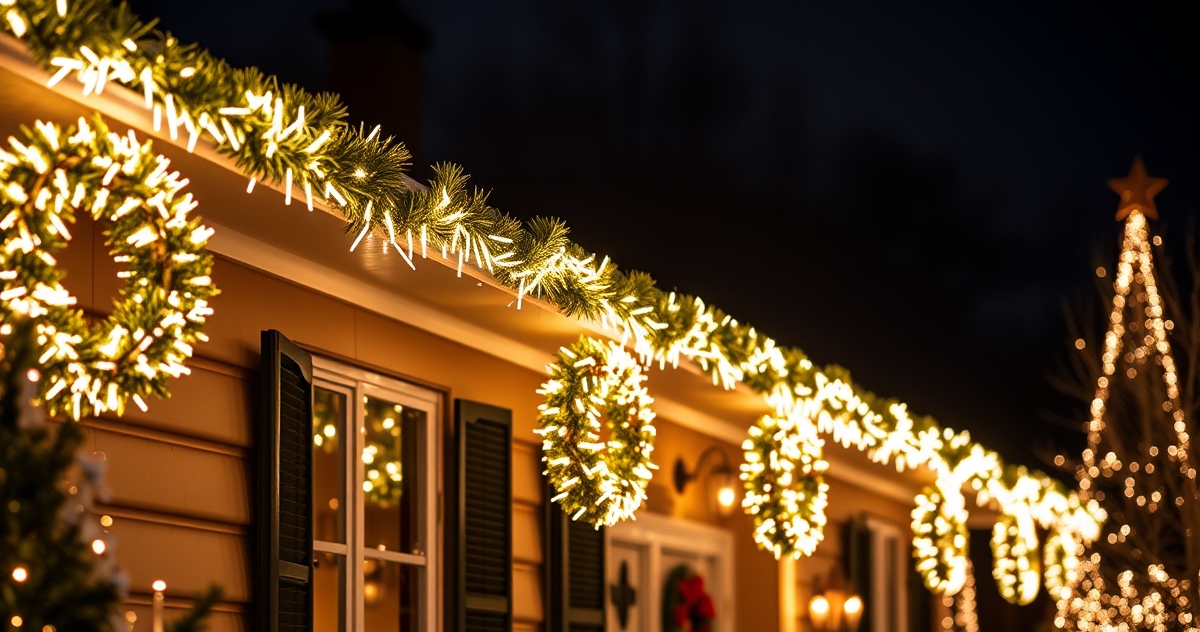
Connecticut's historic estate gardens and vineyard venues frequently feature wooden or wrought-iron pergolas as ceremony focal points. For these structures, garland should be wrapped in a continuous spiral rather than draped loosely — a spiral holds tension evenly and prevents the characteristic mid-night sag that plagues loosely pinned installations. A 20-foot pergola beam typically requires 40–50 feet of garland to achieve a full, lush wrap with natural-looking fullness. Interspersing mini light strands within the garland before wrapping — rather than laying them on top afterward — produces a glow that appears to come from inside the foliage itself, which photographs beautifully.
Arches and Altar Structures
Wedding arches require a different approach because they are freestanding and load-sensitive. Heavy oversaturation of garland on a rental arch can shift its center of gravity enough to create a tipping risk during installation or when guests brush past. Professional installers assess the arch's weight rating before planning garland density. Our complete guide to wedding arch and altar lighting in Connecticut covers this in detail, but the short answer is: distribute weight symmetrically, anchor the base before dressing the top, and always test stability with a lateral push before the wedding party arrives.
Tent Poles and Interior Structures
Tent pole draping is one of the highest-impact transformations available at any price point. Running garland in a swag pattern between center poles — looping down and back up in graceful curves — with warm white mini lights threaded inside creates the classic Connecticut tented reception look. The key technical detail is securing each swag point with rated cable ties or professional-grade mounting hooks rather than floral wire, which cuts into garland stems and causes premature browning. For full reception tent lighting strategy, our post on lighting tents, tables, and dance floors in Connecticut covers the full scope from overhead swags to table-level accents.
Garland Freshness Through a Long Summer Event
Connecticut summers bring humidity and heat that can accelerate browning in fresh-cut garland. Professional teams typically install fresh garland no more than 24–36 hours before the event and mist the foliage lightly if temperatures exceed 85°F in the days prior. Artificial premium garland is a viable alternative for venues where multiple-day setups are required. For tips on keeping displays fresh throughout the season, see our resource on garland maintenance secrets for Connecticut displays.
Professional Installation: Safety Near Guests and Catering
Professional installation ensures safety near guests and catering setups by eliminating the three most common outdoor lighting hazards: exposed cords in walkways, overloaded circuits near water sources, and improperly secured overhead fixtures that can fall. These are not hypothetical risks — they are documented causes of event injuries and electrical fires, and they are entirely preventable with proper planning.
Circuit Load Management
A standard 15-amp outdoor circuit can safely handle approximately 1,440 watts of continuous load. A typical outdoor wedding setup with 20,000 mini lights (LED), garland lighting, uplighting, and pathway markers can require 8–12 separate circuits. Professional installers map circuit loads before the event and coordinate with the venue's electrician or generator provider to ensure no single circuit is overloaded. This coordination is especially important at historic Connecticut estates where original electrical infrastructure may not support modern event loads without supplemental generator power.
Cord Management in High-Traffic Areas
Cords running across guest walkways, near the bar, or behind the catering station must be covered with ADA-compliant cord covers rated for outdoor use, or routed overhead using catenary wire systems. Our installation crews use color-coded cord covers to differentiate power runs from decorative elements, making troubleshooting fast if a strand needs attention mid-event. In catering areas specifically, all connections must be GFCI-protected to prevent shock risk near water, ice, and wet surfaces — this is both a safety best practice and a requirement under Connecticut's electrical code for outdoor commercial events.
Weather Preparedness
Connecticut summer afternoons are notoriously unpredictable. Afternoon thunderstorms can arrive with 30 minutes of warning, and a professional lighting installation accounts for this. All connectors used in outdoor Connecticut wedding installations should carry a minimum IP44 waterproof rating; IP65 is preferred for fully exposed elements. Every power connection should be elevated off the ground on a dedicated stake or hung from the structure itself, never lying on grass where water can pool around it. Couples who are planning spring or summer celebrations well in advance will find our guide to Connecticut wedding season romantic lighting useful for understanding timeline and weather contingency planning.
Comparing Warm White vs. Cool White for Connecticut Wedding Settings
Choosing between warm white and cool white is one of the first decisions a Connecticut couple makes with their lighting team. The table below summarizes how each performs across the most common outdoor wedding venue types in the state.
| Venue Type | Warm White (2700K–3000K) | Cool White (4000K–6000K) | Recommended Choice |
|---|---|---|---|
| Historic estate garden | Enhances stone, wood, and aged surfaces beautifully | Can appear stark against natural materials | Warm white |
| Modern waterfront venue | Adds warmth to cool water reflections | Complements contemporary architecture well | Either; warm preferred for ceremonies |
| Vineyard or farm setting | Flatters greenery, wood barns, and earth tones | Can wash out foliage tones in photos | Warm white |
| White tent reception | Creates golden, candlelit interior atmosphere | Produces a brighter, more utilitarian feel | Warm white |
| Coastal Connecticut property | Warm contrast to blue water and grey shingles | Blends into natural coastal palette | Warm white for romance; cool for modern look |
For Connecticut waterfront properties specifically, our team has developed specialized installation practices — learn more in our resource on marine-grade lighting for Connecticut coastal homes.
Planning Your Connecticut Summer Wedding Lighting Timeline
Booking your professional lighting team 3–6 months before your summer wedding date is the single most important planning step you can take. Connecticut's wedding season — May through October — is genuinely competitive, and lighting crews book out quickly after January. Here is a realistic planning timeline for a June or July wedding:
- 6 months out: Initial venue walkthrough with lighting designer; discuss structural constraints, power availability, and aesthetic vision.
- 4–5 months out: Finalize lighting plan, confirm garland quantities, reserve equipment inventory, and coordinate with venue coordinator and caterer on layout.
- 2–3 months out: Confirm generator needs with venue electrician; finalize mini light strand counts and circuit map.
- 1 month out: Final walkthrough with couple to confirm any layout changes; confirm installation day access with venue.
- 1–2 days before: Professional installation crew on site; safety walk with venue manager before guests arrive.
- Morning after: Professional breakdown and removal, leaving the venue as found.
For couples who are also thinking about holiday or year-round lighting for their home, our post on planning Christmas lighting installation in summer explains why getting ahead of seasonal demand pays off. The same logic applies perfectly to summer wedding lighting.
What Connecticut Couples Often Overlook
Beyond the main ceremony and reception spaces, several often-overlooked venue areas benefit dramatically from thoughtful lighting additions:
- Guest arrival pathways: Warm white mini lights wound around shepherd's hooks or staked pathway markers guide guests from parking areas and set the tone before they reach the main event space.
- Cocktail hour spaces: A separate cocktail garden or patio with its own garland-draped pergola and mini light canopy creates a distinct atmosphere that transitions naturally into the reception reveal.
- Photo backdrop areas: A dedicated lit arch or garland wall near the dance floor gives guests a natural gathering point and produces consistently beautiful candid photographs without requiring a professional photographer to be in two places at once.
- Parking and transition zones: Well-lit pathways between parking areas and the venue proper are both a safety issue and a hospitality detail — guests notice the care immediately upon arrival.
Our team serves residential clients across Connecticut for events of all scales, and our full range of services includes everything from single-arch ceremony installations to full multi-zone reception venue setups. We also work with commercial clients including wedding venues, restaurants, and event spaces that host weddings throughout the summer season — see our related resource on restaurant patio lighting for Connecticut outdoor dining for how these same techniques apply in commercial settings.
Frequently Asked Questions
How many mini lights do I need for a 40-by-60-foot wedding tent?
A 40-by-60-foot tent ceiling (2,400 square feet) at professional density requires approximately 24,000–36,000 mini lights for a full canopy drape that reads as lush and uniform rather than sparse. That count covers the overhead plane only; tent pole swags, perimeter scalloping, and accent areas add additional strands. Your lighting designer will calculate exact quantities during the venue walkthrough based on tent height, pole placement, and the visual effect you want to achieve.
Is professional lighting installation required for outdoor Connecticut weddings, or can couples DIY?
Professional installation is not legally required for private residential outdoor weddings in Connecticut, but it is strongly recommended for any venue with more than 50 guests or any setup that involves overhead rigging, tent attachment, or power connections near catering and bar areas. Connecticut's electrical code requires GFCI protection for all outdoor receptacles used at commercial or semi-commercial events, and most wedding venues with event permits mandate professional installation to maintain their liability coverage. DIY installations that fail mid-reception — a tripped breaker, a fallen garland swag, a cord trip hazard — create safety and vendor liability situations that are expensive to resolve at 8 p.m. on a Saturday night.
What is the difference between warm white and cool white mini lights for weddings?
Warm white mini lights (2700K–3000K) emit an amber-tinted glow that mimics candlelight and flatters skin tones in photographs — making them the preferred choice for romantic evening ceremonies and receptions. Cool white mini lights (4000K–6000K) produce a crisper, more neutral-to-blue light that suits contemporary or minimalist aesthetics but can appear clinical or harsh against natural materials like wood, stone, and foliage. For the overwhelming majority of Connecticut outdoor weddings, warm white is the right choice; cool white is occasionally used as a deliberate design contrast rather than a primary light source.
How far in advance should we book lighting for a summer Connecticut wedding?
Book your lighting team at least 3–6 months before your summer wedding date. June and July Saturdays in Connecticut fill quickly — often by February for that same year — because lighting crews serve multiple event types simultaneously (graduations, corporate events, private parties). Earlier booking also allows time for a proper venue walkthrough, equipment sourcing for large orders, and coordination with your venue coordinator and caterer on layout logistics that affect lighting placement.
Can garland hold up outdoors overnight in Connecticut's summer humidity?
Fresh garland holds up well for a single-day event when installed 24–36 hours in advance and lightly misted in high heat. Connecticut's summer humidity (often 70–85% relative humidity in July and August) actually slows drying compared to arid climates, which helps fresh garland stay green through a long reception evening. For multi-day setups — venues where decor goes up on Thursday for a Saturday wedding — premium artificial garland is the professional recommendation because it maintains its appearance regardless of temperature and humidity fluctuations.
Do you handle lighting removal and storage after the wedding?
Yes. Holiday Lights Decor Connecticut provides full installation and removal service for all wedding and event lighting. Our crew returns after the event — typically the morning after the wedding — to take down all fixtures, garland, and power infrastructure, leaving the venue in its original condition. This service is included in our standard event lighting packages and is an important detail to confirm with any lighting provider, since some couples discover after booking that breakdown service is priced separately. Learn more about how we handle removal and storage services for seasonal and event lighting throughout Connecticut.
Ready to start planning the lighting for your Connecticut outdoor wedding? Contact our team today for a free estimate — we'll walk your venue, map every circuit, and build a custom lighting plan that makes your summer celebration genuinely unforgettable.