Key Takeaways
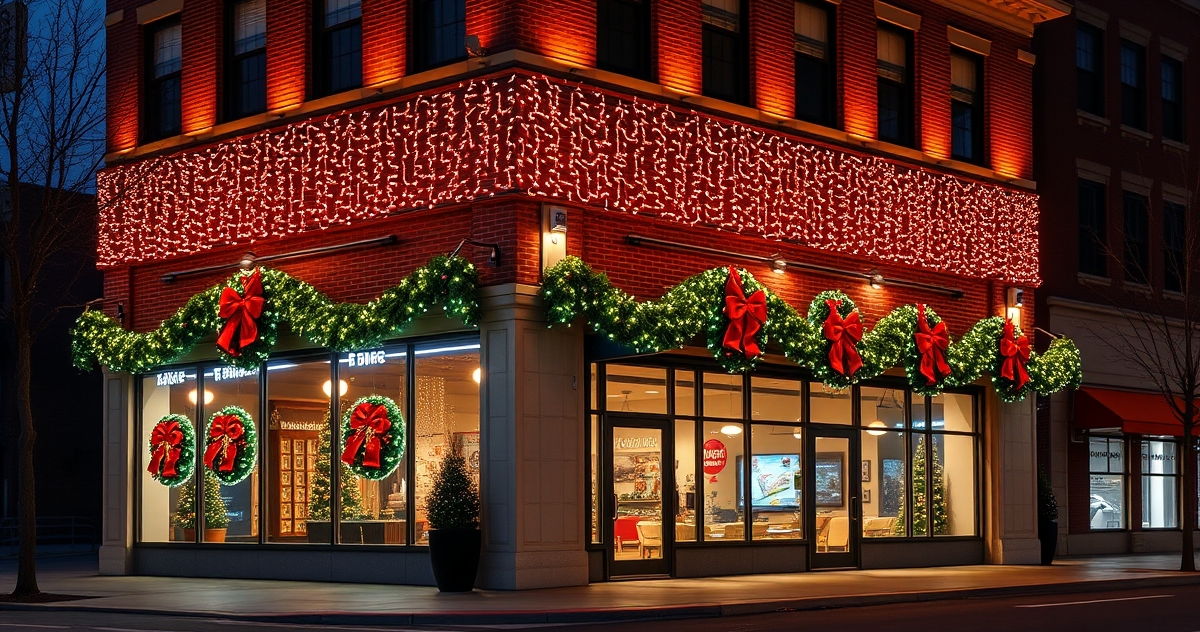
- C9 bulbs along rooflines and window outlines create visible, brand-consistent beacons that pull evening foot traffic toward Connecticut storefronts from a full block away.
- Color temperature — warm white (2700K–3000K) versus cool white (5000K–6000K) — directly signals brand personality and should match your interior atmosphere and merchandise.
- Professional storefront lighting installations typically deliver measurable foot-traffic increases of 20–35% during evening hours, far outpacing the short lifespan and uneven output of consumer-grade strip lights.
- Mini lights woven through window displays and canopy edges add layered depth that photographs well on social media, extending your marketing reach beyond the sidewalk.
- Connecticut's mix of historic downtowns, waterfront districts, and modern retail centers each demands a tailored lighting strategy — one-size-fits-all kits rarely meet municipal aesthetic guidelines or brand standards.
Walk down almost any Connecticut Main Street at 8 p.m. on a warm July evening and the storefronts that glow — the ones with crisp C9 bulbs tracing their rooflines or mini lights cascading through their windows — are the ones with people standing outside them. It is not coincidence. It is physics, psychology, and a little bit of strategic planning working together. Summer evenings in Connecticut stretch well past sunset, giving retailers, restaurants, and service businesses an extra two to three hours of viable foot traffic compared to December — yet most business owners spend far more on holiday décor than on the summer lighting that could fill those golden hours. That mismatch is an opportunity, and Connecticut businesses that seize it are already outperforming their competitors on the same block.
Why Evening Visibility Is the Real Summer Revenue Driver
Storefront lighting displays for Connecticut businesses work because the human eye is drawn to contrast. When ambient light drops after 8 p.m. on a midsummer evening, a darkened façade recedes while a lit one advances — it literally appears closer and more inviting. Research from the Illuminating Engineering Society consistently shows that pedestrians make venue decisions within the first four seconds of visual exposure, and brightness is the single fastest cue the brain processes.
Connecticut's downtowns — from Fairfield County's shoreline villages to the brick corridors of Hartford's Parkville neighborhood and the colonial streetscapes of Litchfield County — host farmer's markets, art walks, concert series, and outdoor dining events throughout June, July, and August. Those events end after dark, and the businesses that are still lit are the ones capturing the post-event stroll. A professional roofline installation of commercial-grade C9 bulbs can place your storefront in a shopper's sightline from 150 to 200 feet away. Consumer pop-up strip lights mounted with adhesive tape typically fade or fail within one season and cast light unevenly, leaving dark gaps that read as neglect rather than ambiance.
For a deeper look at how Connecticut's commercial corridors coordinate lighting strategies across multiple storefronts, see our post on office building exterior lighting for Connecticut corporate campuses — many of the same principles apply at the retail scale.
C9 Bulbs: The Workhorse of Storefront Roofline and Window Outlines
C9 bulbs are the 1.5-inch faceted bulbs mounted on commercial SPT-2 wire that have defined American storefronts since the mid-twentieth century — and for good reason. Their size, shape, and spacing (typically 12 inches on center for storefronts) create a clear, readable outline even in full daylight, which means your signage effect begins before sunset and intensifies as evening arrives.
Warm White C9s: Approachable and Timeless
Warm white C9 bulbs (2700K–3000K) cast a golden, incandescent-adjacent glow that reads as welcoming and established. For Connecticut retailers selling food, apparel, home goods, gifts, or anything lifestyle-oriented, warm white signals comfort and quality. It also photographs beautifully in the warm ambient light of a summer evening, meaning customers who snap a photo in front of your store — or tag you on social media — are sharing flattering, on-brand imagery organically.
Cool White C9s: Crisp, Modern, and High-Contrast
Cool white C9 bulbs (5000K–6500K) deliver a crisp, almost daylight-equivalent brightness. They are the right choice for tech retailers, medical or dental offices with street-level visibility, fitness studios, and contemporary restaurant concepts where a clean, energetic aesthetic supports the brand promise. Cool white also pairs exceptionally well with blue or silver accent elements and looks striking against the white-painted facades common in Connecticut's Federal and Greek Revival commercial blocks.
Our dedicated guide to window display lighting for Connecticut retail and professional setups walks through the exact fixture placement and color temperature pairings that work best for different merchandise categories.
Mini Lights: Layering Depth Into Window and Canopy Displays
Mini lights — the 5mm or M5 LED strings that most people associate with Christmas trees — are among the most versatile tools in a commercial summer lighting plan. When woven through window displays, draped along canopy edges, or suspended as curtain drops behind plate glass, they add a layer of visual texture that makes a storefront feel curated rather than merely functional.
Window Weaving Techniques That Sell
A professional installer will run warm white mini light strings in a grid or cascade pattern behind your featured merchandise, creating a halo effect that draws the eye inward. The result is a window display that has depth — foreground products, mid-field lighting, background glow — rather than a flat, overlit showcase. Retailers in Connecticut's shoreline towns have found that this technique increases the average time a pedestrian pauses at a window from roughly three seconds to eight or more, a meaningful difference when your sidewalk is busy after a waterfront concert.
Canopy and Awning Edges
Stringing commercial-grade mini lights along the inside leading edge of an awning — in warm white for a bistro, cool white for a boutique gym — creates a defined perimeter that reinforces your storefront's footprint on the sidewalk. Unlike adhesive strip lights, professionally wired mini light strings on stainless mounting clips can be removed seasonally without damaging fabric awnings, an important consideration for Connecticut landlords and historic district tenants.
For creative applications beyond the obvious, our post on creative summer uses of mini lights in Connecticut offers additional inspiration applicable to commercial settings.
Color Temperature and Brand Identity: Making the Right Choice
Color temperature is the single most misunderstood variable in commercial storefront lighting — and the one most likely to undermine an otherwise well-executed installation. The table below maps common Connecticut business types to the color temperature range that best supports their brand identity and customer experience goals.
| Business Type | Recommended Color Temp | Fixture Recommendation | Brand Signal |
|---|---|---|---|
| Boutique retail / gift shop | 2700K–3000K (warm white) | C9 roofline + mini light windows | Warmth, quality, discovery |
| Farm-to-table restaurant / café | 2700K–3000K (warm white) | C9 outline + canopy mini lights | Comfort, authenticity, appetite |
| Fitness studio / wellness spa | 4000K–5000K (neutral–cool white) | C9 roofline + cool white window frames | Energy, cleanliness, focus |
| Tech / electronics retail | 5000K–6500K (cool white) | C9 outline + cool mini light display | Innovation, precision, modernity |
| Professional services (law, finance) | 3500K–4000K (neutral white) | C9 entrance arch + subtle window glow | Authority, approachability, trust |
| Waterfront / marina retail | 2700K–3000K (warm white) | C9 roofline + marine-grade mini lights | Relaxation, experience, premium |
Connecticut's shoreline and riverfront businesses have an additional consideration: salt air and humidity accelerate corrosion on inferior fixtures. Commercial-grade C9 strings use UV-stabilized wire and nickel-plated sockets that resist the coastal environment — a non-negotiable specification for businesses in towns along Long Island Sound. Our post on marine-grade lighting for Connecticut coastal properties covers the exact specifications to require from any installer.
Professional Installation vs. DIY Strip Lights: The Real ROI Calculation
The ROI of professional storefront lighting far exceeds DIY alternatives once you account for total cost of ownership, not just upfront price. This is the section most business owners wish they had read before their third trip to a big-box store.
The True Cost of Consumer Strip Lights
Adhesive LED strip lights sold at consumer retailers are typically rated for 10,000 to 20,000 hours under ideal conditions — conditions that never exist on a Connecticut storefront exposed to summer humidity, UV radiation, temperature swings, and physical contact. Real-world lifespan in a commercial exterior application is commonly 12 to 18 months before color shift, dead zones, or adhesive failure require replacement. At $40–$80 per linear run plus the labor of an employee spending 2–3 hours on a ladder, costs compound rapidly. The visual result — inconsistent color output, visible hot spots, sagging wire — also undermines the professional image a business has invested years building.
What Professional Commercial-Grade Installations Deliver
Commercial SPT-2 wired C9 strings with LED replacement bulbs are rated for 50,000 hours and carry a manufacturer warranty of 3–5 years. A professional installer maps circuits to avoid overloads, secures every socket with weatherproof clips, and integrates the system with a programmable timer or smart controller so lights activate at dusk and shut off automatically — eliminating the energy waste of lights running at 3 a.m. (See our post on energy monitoring systems for Connecticut smart lighting for a deeper look at efficiency controls.)
On the revenue side, Connecticut retailers who have added professional evening lighting report foot-traffic increases of 20–35% during the 7–10 p.m. window, based on door-counter comparisons between lit and unlit evenings. For a business doing $800,000 in annual revenue with 30% of transactions occurring in evening hours, a 25% evening traffic increase translates to roughly $60,000 in incremental revenue — against a professional installation investment of $1,500–$4,000 for a typical Main Street storefront. The math is straightforward.
Businesses that want a year-round platform for that investment should explore permanent lighting systems, which eliminate seasonal reinstallation costs entirely while providing a consistent brand presence across summer events, fall festivals, and the holiday season.
Connecticut-Specific Considerations: Historic Districts, Permitting, and Seasonal Timing
Connecticut's commercial districts are not homogeneous. A storefront on a brick-paved downtown corridor in a Fairfield County town operates under different aesthetic expectations — and sometimes different municipal guidelines — than a strip-center anchor in a suburban market town. Historic district commissions in cities like New Haven, Middletown, and Norwich review exterior modifications, and some classify permanent light fixture mounting hardware as an alteration requiring approval. A professional installer familiar with Connecticut's regulatory landscape knows which municipalities require a lighting plan submission and which allow commercial C9 installations under standard maintenance permits.
Timing matters too. Connecticut's town-center summer events — outdoor concert series, gallery walks, and farmers markets — cluster between Memorial Day and Labor Day, with peak pedestrian evenings running Thursday through Sunday. Installing your storefront lighting system by the first week of June ensures you capture the full season. Our post on professional installation timelines for Connecticut spring lighting outlines exactly when to book to guarantee availability before the summer rush.
For businesses in designated historic areas, our resource on preserving character with modern lighting in Connecticut historic districts provides a practical framework for navigating commission requirements without sacrificing visual impact.
Building a Complete Storefront Lighting Strategy
A complete commercial storefront lighting strategy combines three layers: architectural definition, display illumination, and accent warmth. The architectural layer — C9 roofline and window outlines — establishes visibility from a distance. The display layer — mini lights woven through windows and along canopy edges — captures attention at close range. The accent layer — pathway lighting, entrance uplighting, or planter illumination — creates the immersive sense of arrival that converts a glance into a visit.
For Connecticut businesses that host evening events, pop-up markets, or outdoor seating, integrating string lights above a patio or sidewalk café area extends the storefront's lit footprint and creates a destination atmosphere. Our post on restaurant patio lighting for Connecticut outdoor dining covers the specifics of overhead canopy systems that complement a storefront display without competing with it.
Ready to build a strategy for your business? Explore our full range of commercial lighting services or browse all services to find the right combination for your location, brand, and budget.
Frequently Asked Questions
What is the best type of bulb for outlining a Connecticut storefront roofline in summer?
C9 LED bulbs on commercial SPT-2 wire are the best choice for storefront roofline outlines in Connecticut. They are large enough to be visible from 150–200 feet away, available in warm white (2700K–3000K) or cool white (5000K–6500K) to match brand identity, and rated for 50,000 hours of use. Unlike consumer-grade strip lights, C9 commercial strings are weatherproof, UV-stabilized, and designed to withstand Connecticut's summer humidity, UV exposure, and temperature swings without color shift or adhesive failure.
How much does professional storefront lighting installation cost for a Connecticut business?
Professional storefront lighting installation for a typical Connecticut Main Street business ranges from approximately $1,500 to $4,000 depending on linear footage, fixture density, and electrical access. That investment covers commercial-grade C9 strings or mini light systems, weatherproof mounting hardware, circuit mapping to avoid overloads, and a programmable timer. When measured against documented foot-traffic increases of 20–35% during evening hours, most businesses recover the installation cost within one to two summer seasons through incremental revenue.
Do I need a permit to install decorative lighting on my Connecticut storefront?
Permit requirements vary by municipality and property type in Connecticut. Most towns allow decorative C9 or mini light installations on commercial exteriors under standard maintenance provisions, but businesses in designated historic districts — common in New Haven, Middletown, Norwich, and many Fairfield County towns — may need to submit a lighting plan to the historic district commission before installation. A professional installer experienced in Connecticut commercial work will identify permit requirements during the site assessment and handle submissions on your behalf.
What color temperature should I choose for my Connecticut retail storefront: warm white or cool white?
Warm white (2700K–3000K) suits boutique retail, restaurants, cafés, gift shops, and any business where comfort, discovery, and warmth are central brand values. Cool white (5000K–6500K) is the better choice for fitness studios, tech retailers, contemporary service businesses, and medical or wellness practices where cleanliness, precision, and energy are the brand signals. Neutral white (3500K–4000K) bridges both worlds and works well for professional services firms that want an approachable but authoritative presence. When in doubt, a professional installer can provide mock-up samples at your location before committing.
Can storefront summer lighting be converted for use during the holiday season?
Yes — and this is one of the strongest financial arguments for investing in a professional installation. Commercial-grade C9 and mini light systems installed for summer can remain in place or be transitioned to holiday configurations with bulb swaps and the addition of seasonal elements like garlands and wreaths. Many Connecticut businesses choose permanent lighting systems that serve year-round with seasonal programming changes, eliminating both reinstallation labor and the storage challenges of seasonal takedown. Our removal and storage service is available for businesses that prefer seasonal flexibility.
How does storefront lighting affect social media visibility for Connecticut businesses?
Professionally lit storefronts generate significantly more organic social media content than unlit ones because customers photograph and share visually compelling environments. Warm white C9 outlines and mini light window displays create the kind of warm, glowing aesthetic that performs well on Instagram and Google Business photos — both of which influence location discovery. Businesses in Connecticut's competitive retail corridors report that customer-generated photos of their lit storefronts regularly outperform their own promotional posts in reach and engagement, effectively extending their marketing budget without additional spend.
Summer evenings in Connecticut are a revenue opportunity that too many businesses leave dark. Whether you operate a boutique on a Fairfield County town green, a restaurant steps from the shoreline, or a service business in a Hartford neighborhood corridor, professional storefront lighting displays position your Connecticut business to capture the foot traffic that is already walking past your door. Contact us today for a free estimate — our team will assess your façade, recommend the right C9 and mini light configuration, and have you glowing before the summer season peaks.