Key Takeaways
- C9 bulbs (2.25" diameter) are the gold standard for Connecticut rooflines, gutters, and large trees — their size and brightness read beautifully from the street on colonial and cape-style homes.
- LED C9s outlast incandescent bulbs by tens of thousands of hours and handle Connecticut's freeze-thaw cycles far better, saving 80–90% in energy costs.
- Warm white and classic multicolor are the most popular C9 color choices in Connecticut neighborhoods; cool white works best on modern or gray-shingle homes.
- Proper spacing — 12 inches for rooflines, 18–24 inches for pathways — prevents the "gap and cluster" look that plagues DIY installations.
- Booking professional C9 installation early (ideally by late summer) locks in the best scheduling slots before Connecticut's busy fall season fills up.
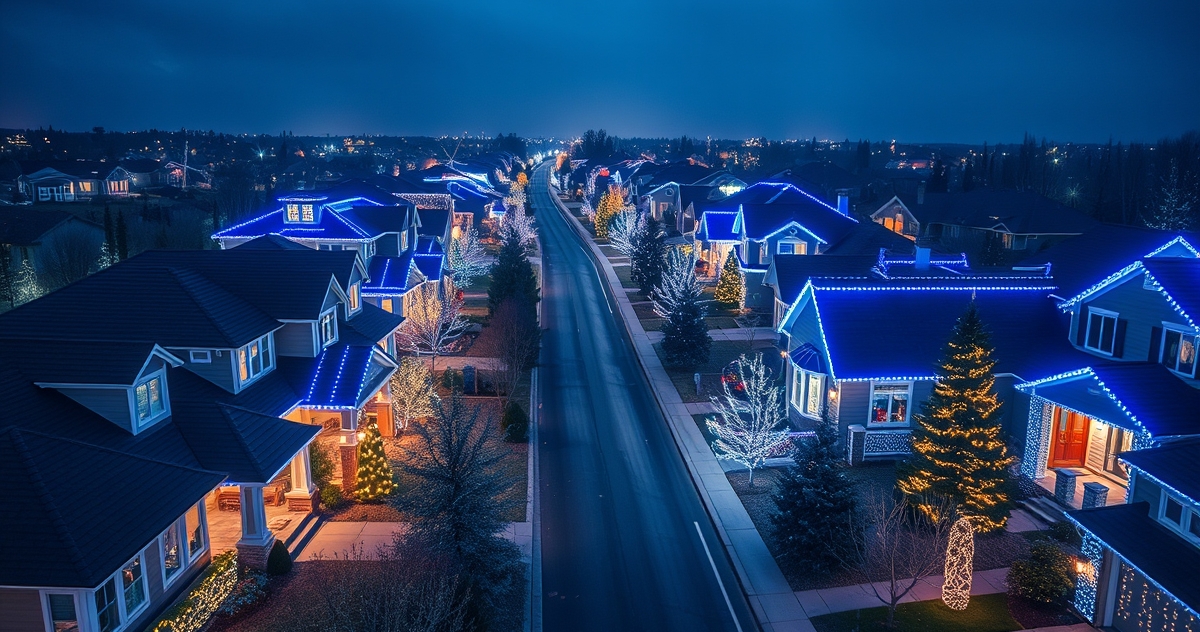
Drive through any established Connecticut neighborhood in December — a Farmington Valley colonial, a shoreline cape in Madison, a Dutch colonial in Fairfield County — and the homes that stop traffic share one thing: a bold, evenly spaced run of C9 bulbs tracing every roofline peak, valley, and gutter edge with crisp, jewel-bright light. C9 bulbs have been the professional installer's workhorse for decades, and for good reason. They're large enough to command attention from 60 feet away, rugged enough to survive repeated New England freeze-thaw cycles, and versatile enough to anchor everything from a 1,200-square-foot cape to a sprawling Georgian estate. This guide covers everything Connecticut homeowners need to know before buying — or hiring someone to install — C9 bulbs this season.
C9 vs. C7 Bulbs: Sizing Explained for Connecticut Homes
C9 bulbs measure approximately 2.25 inches in diameter and sit on an E17 (intermediate) base, while C7 bulbs measure roughly 1.5 inches in diameter on a smaller E12 (candelabra) base — a difference that dramatically changes how each reads on an exterior.
The "C" stands for "cone" (the classic pointed-tip shape), and the number roughly corresponds to eighths of an inch across the bulb's widest point: a C9 is about 9/8" (just over an inch) across its narrowest cross-section, though total diameter including the dome is closer to 2.25". What matters practically is visual weight and throw distance.
Which Size Works Best on Connecticut Colonial and Cape-Style Rooflines?
Connecticut's most common architectural styles — New England colonials, cape cods, saltboxes, and Dutch colonials — typically feature steep, prominent rooflines with long gutter runs that sit 18 to 30 feet above grade. At that height, C7 bulbs simply disappear. They read as a thin, faint dotted line from the street. C9 bulbs, by contrast, hold their visual presence at distance and create the bold, defined outline that makes a home look intentional and professionally decorated.
- Colonial (2-story, symmetrical): C9s along the full roofline ridge and gutters, with C7s or mini lights reserved for window framing or porch rails where close-up detail matters.
- Cape Cod (1.5-story, low eaves): C9s on the lower gutters and dormers; the low eave height actually means bulbs sit closer to eye level, so C9s look especially bold and inviting.
- Saltbox (asymmetrical long rear slope): The dramatic rear slope is a C9 showcase — run a single strand along the full rake for a sweeping silhouette effect.
- Ranch (low, horizontal profile): C9s along the single gutter run create a strong horizontal band of light; pair with pathway C9s to add vertical interest through surrounding landscaping.
For a deeper look at C9 color and style options specifically matched to Connecticut home exteriors, see our guide on C9 bulb colors, styles, and best uses for Connecticut homes.
| Feature | C7 Bulb | C9 Bulb |
|---|---|---|
| Diameter | ~1.5 inches | ~2.25 inches |
| Base type | E12 (candelabra) | E17 (intermediate) |
| Visibility at 30 ft | Moderate | Excellent |
| Best use (exterior) | Window frames, porch rails, close details | Rooflines, large trees, pathway borders |
| Typical spacing | 6–9 inches | 12 inches (roofline), 18–24 inches (pathway) |
| Wattage (incandescent) | 5W per bulb | 7–10W per bulb |
| Wattage (LED) | 0.5–0.8W per bulb | 0.5–1.0W per bulb |
LED vs. Incandescent C9s: Energy Savings and Durability in Connecticut Winters
LED C9 bulbs are definitively the better choice for Connecticut exteriors — they use 80–90% less energy than incandescent equivalents and are engineered to survive the freeze-thaw cycling that cracks filaments and corrodes sockets in traditional bulbs.
Connecticut winters are notoriously hard on outdoor lighting. Temperatures can swing from 45°F on a December afternoon to 8°F overnight, and the coast sees additional salt-air humidity that accelerates corrosion. A single Connecticut holiday season subjects outdoor lighting to dozens of freeze-thaw cycles between Thanksgiving and New Year's Day. Here's how the two technologies compare in that real-world environment:
Energy Cost Comparison for a Typical Connecticut Roofline
A mid-size colonial in Simsbury or West Hartford might have 150 linear feet of roofline. At 12-inch spacing, that's 150 C9 bulbs. Running 8 hours a night from late November through January 1 (about 40 nights):
- Incandescent C9s (7W each): 150 bulbs × 7W = 1,050W per hour → 1.05 kWh/hour × 8 hours × 40 nights = 336 kWh. At Connecticut's average residential rate of roughly $0.25/kWh, that's ~$84 per season.
- LED C9s (0.7W each): 150 bulbs × 0.7W = 105W per hour → 0.105 kWh/hour × 8 hours × 40 nights = 33.6 kWh. At the same rate, that's ~$8.40 per season — a savings of over $75 on a single display.
Durability: Why LEDs Win Connecticut's Freeze-Thaw Battle
LED C9s have a rated lifespan of 25,000–50,000 hours, compared to 1,000–3,000 hours for incandescent C9s. More importantly for New England, LEDs produce no filament — the primary failure point in cold weather. They also run cool to the touch, eliminating the heat-expansion stress that cracks glass envelopes after repeated temperature swings. Professional installers in Connecticut overwhelmingly use LED C9s on commercial-grade SPT-1 or SPT-2 wire, which retains flexibility down to -40°F, for exactly this reason.
If you're thinking about your installation timeline, our post on planning Christmas lighting installation in summer explains why ordering and scheduling early is especially important for Connecticut homeowners who want LED products before inventory tightens in October.
Color and Spacing Recommendations for Every Application
Color choice and precise spacing are what separate a professional C9 installation from a DIY attempt — and they depend on your home's siding color, architectural scale, and the visual effect you want to achieve.
Rooflines: Color and Spacing That Work
For rooflines, 12-inch center-to-center spacing is the professional standard. Closer than 9 inches and the bulbs visually merge at distance; farther than 15 inches and gaps become noticeable — especially on long gutter runs. Spacing clips should be installed flush with the gutter lip, not dangling, to keep the line perfectly horizontal.
- Warm white (2700K–3000K): The most universally flattering choice. Complements red brick, tan clapboard, cream trim, and cedar shingles. Creates an elegant, classic New England aesthetic. Best-selling option for Connecticut colonials.
- Cool white (5000K–6000K): Crisp and modern. Stunning on gray, slate-blue, or white-painted shingles. Works especially well on contemporary homes in the Hartford suburbs and Fairfield County.
- Multicolor (traditional red/green/blue/yellow/orange): The most festive, high-energy look. Beloved on cape cods and cottages where a playful, welcoming vibe matches the architecture.
- Red and green only: A refined take on classic Christmas color. For Connecticut homeowners who want festive color without the full multicolor palette, alternating red and green C9s on a roofline reads as bold but intentional. See our related post on timeless red and green Christmas color combinations in Connecticut.
Trees: Wrapping and Outlining Techniques
Large deciduous trees — the mature oaks and maples that anchor so many Connecticut front yards — look spectacular when their trunks and primary branches are outlined with C9s on 12-inch spacing. For full wrapping of a 10-inch-diameter trunk, plan on roughly 1 strand per 3 vertical feet. Arborvitae and columnar evergreens used as driveway borders can be spiraled with C9s at 18-inch spacing for a dramatic effect that reads from the street without overwhelming the plant's natural form.
Our professional tree lighting service covers single specimen trees through multi-tree installations for Connecticut properties of all sizes.
Pathway Borders: Spacing for Safety and Style
Pathway and driveway border applications use wider spacing — 18 to 24 inches — because viewers are close to the lights and the goal is accent rather than mass illumination. Warm white C9s at 18-inch spacing along a bluestone walkway create a welcoming runway effect without overpowering porch or door lighting. Multicolor C9s at 24-inch spacing work beautifully along naturalistic landscaping borders where a more casual, festive feel is appropriate.
For patriotic summer applications using C9 bulbs in red, white, and blue for pathways and porch borders, see our guide on C9 bulb porch patriotic displays for Connecticut Independence Day.
Installation Best Practices for Connecticut Exteriors
Professional C9 installation involves far more than clipping strands to gutters — wire routing, load calculation, and weatherproofing all directly affect safety, appearance, and longevity through a New England winter.
Electrical Load Planning
Even LED C9s require thoughtful load balancing. A typical 20-amp exterior circuit should not exceed 80% of rated capacity (1,600 watts) for continuous holiday lighting loads. At 0.7W per LED C9 bulb, you can run approximately 2,285 bulbs per circuit — more than enough for most residential installations. Incandescent C9s at 7W each allow only about 228 bulbs per circuit before exceeding safe load, which is why large incandescent displays almost always require multiple dedicated circuits or professional load management.
Weatherproofing Connections in Connecticut's Climate
Every socket-to-bulb connection point is a potential moisture intrusion point. Professional installers use dielectric grease on E17 sockets before seating each bulb — a 30-second step that prevents the green corrosion that causes flickering and dead sockets after the first Connecticut thaw. Outdoor-rated extension cords and GFCI-protected outlets are non-negotiable on any Connecticut installation. All wire-to-cord connections should be elevated off ground surfaces to prevent standing-water immersion during December rain events and January thaws.
Our full residential holiday lighting service includes professional installation, electrical safety checks, and weatherproofing on every job we take in Connecticut.
Seasonal Planning: When to Book C9 Installation in Connecticut
Connecticut's holiday lighting installation season runs roughly from mid-October through late November, and the best time slots — Saturdays in the first three weeks of November — fill up fast. LED C9 product inventory from major professional suppliers tightens in September and October as national demand peaks.
Homeowners who want specific color combinations, custom spacing plans, or large-quantity runs (200+ bulbs) consistently get better results by scheduling in summer or early fall. Our August early-bird booking guide explains exactly what advantages early scheduling provides, including price locks and product guarantees.
After the season ends, proper removal and storage is equally important. C9 strands stored tangled or damp will arrive next November with corroded sockets and broken bulbs. Professional storage in labeled, climate-controlled bins extends LED C9 strand life to 10+ seasons.
Frequently Asked Questions
What is the difference between C9 and C7 Christmas lights for a Connecticut home exterior?
C9 bulbs are larger (approximately 2.25" diameter, E17 base) and provide significantly more visual impact at distance — making them ideal for Connecticut rooflines, large trees, and gutter runs that sit 15–30 feet above grade. C7 bulbs (approximately 1.5" diameter, E12 base) are better suited for close-up accent work like window framing, porch rails, and shrub outlines where viewers are within 10 feet. On a two-story Connecticut colonial, C7s on the roofline will simply disappear from the street; C9s will define every architectural line boldly.
Are LED C9 bulbs worth the higher upfront cost for Connecticut homeowners?
Yes — LED C9 bulbs pay back their premium within one to two seasons for most Connecticut homeowners. A 150-bulb incandescent roofline display costs roughly $84 per season in electricity at Connecticut rates (~$0.25/kWh); the same display in LED costs about $8.40. Over five seasons that's a savings of approximately $378 in energy alone, before counting the reduced bulb replacement costs (LEDs last 25,000–50,000 hours vs. 1,000–3,000 for incandescent). LED C9s also handle Connecticut freeze-thaw cycles dramatically better because they have no filament to crack.
What C9 bulb color looks best on a Connecticut colonial or cape-style home?
Warm white C9 bulbs (2700K–3000K) are the most flattering choice for the majority of Connecticut colonials and capes because they complement red brick, cream clapboard, cedar shingles, and natural wood trim without fighting the home's palette. Cool white (5000K+) works beautifully on gray, slate, or white homes with a contemporary edge. Multicolor C9s remain enormously popular on cape cods, craftsman bungalows, and cottages where a festive, welcoming character suits the architecture. The worst mistake is using cool white on a warm-toned brick colonial — the color clash is visible from 100 feet.
What spacing should I use for C9 bulbs on a Connecticut roofline?
The professional standard for roofline C9 installations is 12 inches (center-to-center). This spacing creates a continuous, even line of light that reads as a solid outline from the street without gaps. Spacing clips should attach flush with the gutter lip so the wire hangs straight rather than drooping in arcs between clips. For pathway borders and driveway edges, 18–24 inch spacing is more appropriate because the viewing distance is shorter and the goal is accent rather than full coverage. Avoid irregular spacing — even a few misplaced clips create visible clusters and gaps that detract from the finished look.
Can C9 bulbs be used for non-Christmas seasonal displays in Connecticut?
Absolutely. C9 bulbs in red, white, and blue are extremely popular for Fourth of July and Memorial Day displays on Connecticut porches, pathways, and fences — their bold size makes them as impactful in summer as in winter. Red and green C9s work for Christmastime and St. Patrick's Day in green-only configurations. Because commercial-grade C9 wire uses screw-in base bulbs, switching from warm white holiday bulbs to red/white/blue patriotic bulbs on the same strand takes just a few minutes, making C9 infrastructure a genuine year-round decorating asset.
How do I find a professional C9 installation service in Connecticut?
Look for a Connecticut-based holiday lighting company that uses commercial-grade SPT-1 or SPT-2 wire (not retail store strands), employs licensed electricians or electrically trained crews, provides a written proposal specifying bulb count and spacing, and includes removal and storage in their service offering. Holiday Lights Decor Connecticut serves residential, commercial, and municipal clients throughout the state — you can request a free on-site estimate through our contact page and get a specific plan for your home's roofline footage, tree count, and pathway needs before committing to any work.
Ready to plan a C9 display that makes your Connecticut home the standout on the street this season? Contact Holiday Lights Decor Connecticut for a free estimate — we'll measure your rooflines, recommend the right bulb color and spacing for your home's architecture, and handle everything from installation through post-season removal and storage so you can enjoy the season without the ladder.