
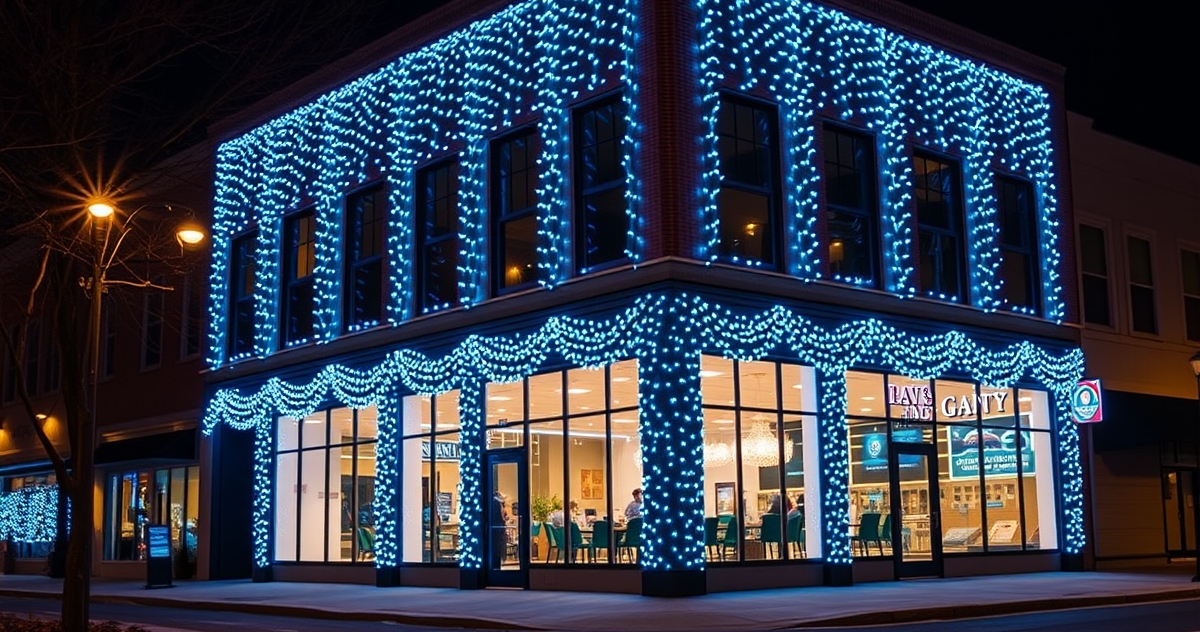
Greenwich Avenue glows with thousands of cool white C9 bulbs stretching from storefront to storefront, creating an enchanting winter shopping corridor that draws visitors from across Fairfield County. This isn't coincidence — it's strategic business district lighting that transforms ordinary commercial strips into magnetic destinations.
Connecticut's most successful business districts understand that coordinated commercial lighting isn't just about individual storefronts looking pretty. It's about creating a unified experience that makes the entire district more attractive to shoppers, diners, and families. When businesses work together with consistent lighting themes, everyone benefits from increased foot traffic and extended shopping seasons.
The Power of Unified Commercial Lighting Design
Individual businesses often struggle with holiday lighting decisions, unsure whether to go bold or subtle, warm or cool. But when an entire district adopts coordinated lighting standards, every business becomes part of something bigger and more compelling than the sum of its parts.
In Westport's downtown district, businesses discovered that their collective investment in uniform cool white C9 bulbs along rooflines created a sophisticated, upscale atmosphere that perfectly matched their brand positioning. Shoppers began describing the area as "magical" and "destination-worthy," leading to measurable increases in foot traffic during the extended holiday season from Thanksgiving through Valentine's Day.
The coordination extends beyond just bulb choice. Successful business districts establish guidelines for:
- Consistent installation heights and patterns
- Standardized color temperatures across all businesses
- Coordinated timing for installation and removal
- Shared maintenance and storage solutions
- Complementary decorative elements like garlands and bows
This level of coordination requires planning and communication, but the results speak for themselves in increased revenue and customer satisfaction.
Multi-Business Collaboration Benefits
Smart Connecticut business owners recognize that lighting collaboration creates competitive advantages that no single business could achieve alone. When the entire district commits to professional-grade lighting, several powerful benefits emerge.
Cost efficiency leads the list of advantages. Bulk purchasing of C9 LED bulbs, professional installation services, and coordinated timing reduces per-business costs significantly. A Mystic shopping district found that collective purchasing reduced individual lighting costs by 35% while achieving far superior visual impact.
Marketing amplification becomes automatic when districts coordinate lighting strategies. Social media posts featuring the entire illuminated district generate more engagement than individual business photos. Local news outlets are more likely to cover district-wide lighting initiatives, providing free publicity for all participating businesses.
Extended shopping seasons naturally develop when coordinated lighting creates an atmosphere that encourages lingering and exploration. Customers who might normally make quick, targeted shopping trips find themselves strolling the entire district, discovering new businesses and making impulse purchases.
Professional reputation enhancement benefits every business when the district earns recognition for its coordinated approach. Awards from tourism boards, features in regional magazines, and word-of-mouth recommendations lift all participating businesses.
Shared Resource Management
Successful business district lighting programs often establish shared storage facilities for off-season equipment, coordinate professional installation schedules to reduce costs, and create maintenance protocols that ensure consistent quality throughout the season.
Some districts even invest in shared decorative elements like oversized wreaths, elegant garlands with uniform bow colors, and matching planters that complement the lighting design. These shared investments create district-wide branding that individual businesses benefit from year after year.
Municipal Partnership Opportunities
Connecticut municipalities increasingly recognize business district lighting as economic development investment. Forward-thinking towns partner with their commercial districts to create lighting programs that benefit everyone involved.
Municipal partnerships can provide crucial infrastructure support. Towns often assist with electrical connections, permitting processes, and coordination with utility companies. Some municipalities contribute financially to district lighting initiatives, recognizing the tourism and tax revenue benefits.
The Town of Madison partnered with their downtown business association to create a lighting program that includes municipal buildings, creating seamless integration between public and private spaces. Visitors experience the entire downtown as a cohesive destination rather than separate entities.
Public safety considerations often drive municipal involvement. Well-lit business districts naturally enhance security and walkability, supporting municipal goals for vibrant, safe commercial areas. Police departments frequently report reduced incidents in well-lit commercial districts.
Parking and traffic management coordination becomes smoother when municipalities participate in district lighting planning. Towns can time parking enforcement adjustments, coordinate with increased traffic patterns, and ensure that municipal lighting complements rather than competes with commercial displays.
Permitting and Regulatory Streamlining
Municipal partnerships often simplify the regulatory aspects of large-scale commercial lighting installation. Towns can establish streamlined permitting processes for coordinated district lighting, reducing bureaucratic barriers that might discourage participation.
Some Connecticut municipalities have created specific commercial district lighting ordinances that provide clear guidelines while encouraging coordinated efforts. These ordinances protect the investment businesses make in quality lighting while preventing conflicts between adjacent properties.
Developing Unified Theme Strategies
Creating cohesive themes across multiple businesses requires careful planning and clear communication. The most successful Connecticut business districts start their theme development process months before installation season.
Color coordination forms the foundation of effective theme development. Districts must choose between warm white and cool white as their primary color scheme, with occasional accent colors for special elements. Mixing color temperatures randomly creates visual chaos rather than cohesive appeal.
Cool white C9 bulbs work exceptionally well for upscale business districts, creating clean, modern aesthetics that photograph beautifully and appeal to sophisticated consumers. Warm white creates more traditional, cozy atmospheres perfect for family-oriented districts or areas with historical character.
Architectural consideration becomes crucial when developing unified themes. Connecticut's diverse commercial architecture — from colonial-inspired storefronts to modern glass facades — requires thoughtful lighting approaches that enhance rather than fight existing design elements.
Garlands provide excellent opportunities for theme unification. Districts can establish standard garland styles, bow colors, and installation methods that create visual continuity while allowing individual businesses some creative flexibility.
Seasonal Progression Planning
Advanced business districts plan lighting themes that evolve throughout the extended holiday season. November installations might feature autumn-themed elements that transition seamlessly into Christmas displays, then adapt for winter ambiance through February.
This seasonal progression keeps the district feeling fresh and gives customers reasons to return throughout the extended season. It also maximizes the return on lighting investment by extending the impact well beyond traditional Christmas shopping periods.
Implementation Timeline and Best Practices
Successful business district lighting coordination requires careful timeline management and clear communication protocols. The most effective Connecticut districts begin planning in spring for the following holiday season.
Spring planning sessions allow businesses to evaluate the previous season's results, discuss theme modifications, and coordinate with municipal partners. Early planning also enables bulk purchasing negotiations and professional installation scheduling before peak season demands.
Summer months provide ideal timing for infrastructure assessments, electrical evaluations, and any necessary repairs or upgrades. Professional commercial lighting specialists can conduct site surveys and develop installation plans during their less busy season.
Fall coordination becomes crucial as installation season approaches. Districts need final participation confirmations, delivery schedules, and installation timing coordination. Weather contingency planning becomes essential in Connecticut's unpredictable fall climate.
Professional installation partnerships streamline the entire process. Rather than each business coordinating separately with contractors, districts can negotiate comprehensive installation packages that reduce costs and ensure consistent quality across all participating businesses.
Maintenance and Storage Coordination
Year-round program management extends well beyond the holiday season. Successful districts establish protocols for mid-season maintenance, post-season removal, and off-season storage that protect their lighting investments.
Some districts invest in shared storage facilities or coordinate with municipal storage options to reduce individual business storage burdens. Proper storage extends equipment life and ensures consistent quality year after year.
Measuring Success and ROI
Connecticut business districts that invest in coordinated lighting programs need metrics to evaluate success and justify continued investment. Smart districts establish baseline measurements before implementing coordinated lighting and track improvements over time.
Foot traffic counting provides concrete data on lighting impact. Many districts see 25-40% increases in foot traffic during coordinated lighting periods compared to previous years without coordination.
Sales data analysis reveals the economic impact of improved district ambiance. Businesses often report extended customer visit durations and increased average transaction values during peak lighting periods.
Customer feedback collection through surveys and social media monitoring provides qualitative insights into lighting program effectiveness. Positive customer comments about district atmosphere directly correlate with coordinated lighting investment.
Tourism board recognition and media coverage provide additional return on investment through free marketing exposure that reaches far beyond local customers.
Frequently Asked Questions
How much does coordinated business district lighting typically cost per business?
Costs vary significantly based on storefront size and complexity, but most Connecticut businesses invest $800-$2,500 annually for professional coordinated lighting. Bulk purchasing through district coordination typically reduces individual costs by 20-35% compared to independent installation.
What happens if some businesses don't want to participate in coordinated lighting?
Successful districts typically achieve 70-80% participation, which creates sufficient visual impact. Non-participating businesses often join in subsequent years after seeing the benefits. Districts can establish guidelines that prevent conflicting lighting choices that undermine the coordinated effect.
How long should business districts commit to coordinated lighting themes?
Most successful districts plan themes for 3-5 year periods, allowing sufficient time to develop recognition and maximize equipment investment. Minor annual adjustments keep themes fresh while maintaining core consistency that customers come to expect.
Can business districts coordinate lighting for seasons beyond winter holidays?
Absolutely. Many Connecticut districts extend their lighting programs through Valentine's Day, and some incorporate summer string lighting for outdoor dining seasons. Year-round coordination opportunities include grand opening celebrations, summer festivals, and seasonal promotions.
What role should individual business branding play in coordinated district themes?
The most successful programs establish strong district-wide consistency for primary lighting elements while allowing individual businesses creative freedom for secondary decorative elements. This balance maintains coordination while preserving individual business personality.
Connecticut business districts that embrace coordinated commercial lighting create compelling destinations that benefit every participating business. From the elegant cool white displays of Greenwich to the warm community atmosphere of smaller town centers, coordinated lighting transforms ordinary commercial strips into memorable experiences that customers seek out and return to throughout extended seasons.
Professional commercial lighting design and installation ensures that district coordination achieves its full potential through consistent quality, reliable performance, and strategic visual impact that drives real business results.